

Coating care
How we support emulsion and film care questions.
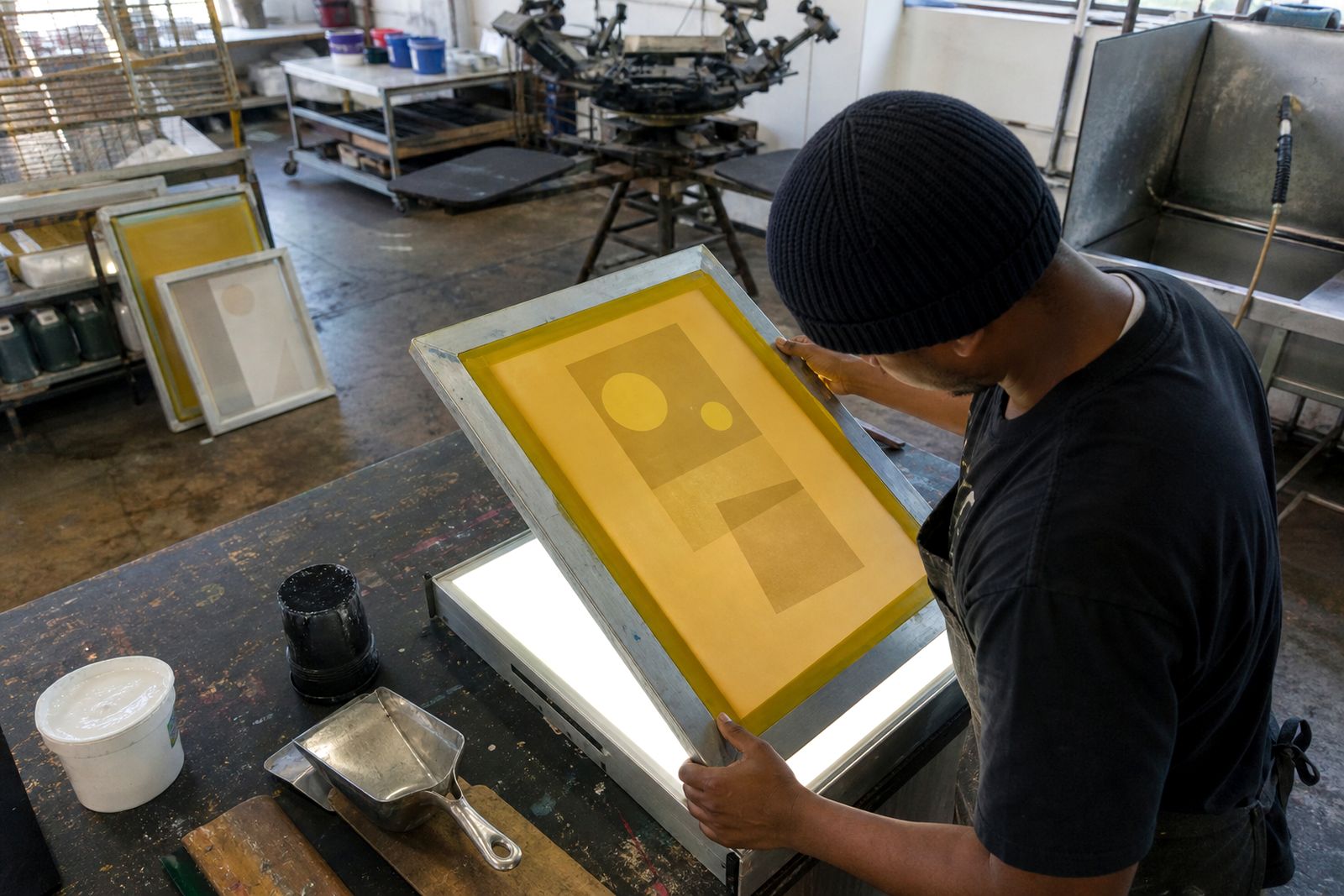
Coating care summary
How we support emulsion and film care questions.
Coating queries can go through our contact form with the mesh count, emulsion type, scoop coater width, and drying conditions in your print room. You can also check Stencils, Kits, and mesh for replacement screens, degreasers, or setup items while reviewing your coating process.
We focus on coating details that affect exposure and stencil life in South African print rooms. Typical checks include edge build-up on the scoop coater, pinholes after drying, undercutting on fine text, and whether humidity, dust, or rinse pressure is affecting the film.
- List mesh count and emulsion used
- Add a photo of the coated screen
- Include your city and print setup
Coating support often depends on the full screen setup, not one step in isolation. Include frame size, mesh colour, coating side, drying rack position, and whether the screen is used in Johannesburg, Durban, or Cape Town, where temperature and moisture levels can change how emulsion settles and hardens.
Start with the coating basics
For emulsion or film care, start by noting what you are using and how it is being handled in the screen room. Dual-cure, diazo and SBQ emulsions all need sensible drying, clean tools and the right exposure setup. Capillary film needs the same care around storage, handling and washout.
If the coating is not behaving as expected, check the simple things first:
- mesh count and tension
- frame type, whether aluminium or timber
- scoop coater width and coating side
- drying conditions, including dust and humidity
For quick guidance, send details through the contact form and include a photo of the coated screen.
What to include with your support request
The more screen-room detail you give, the easier it is to narrow down the cause. Please include:
- whether you are using emulsion or capillary film
- emulsion type, if known, such as dual-cure, diazo or SBQ
- mesh count and tension
- exposure unit type and lamp age, plus exposure time
- ink system involved, such as plastisol, waterbase or discharge
- what went wrong, for example pinholes, undercutting, edge build-up, poor washout or haze
- photos of the screen, front and back if possible
If you are working around power cuts, mention that too, because exposure timing and drying can shift when power is interrupted.
Practical checks before you resend
Before you contact support, look at the whole stencil routine from coating to reclaim. Keep the screen clean, check that the scoop coater is not leaving ridges, and make sure the screen is fully dry before exposure. In coastal areas, humidity can slow drying. On the Highveld, drier air can change how the coating levels.
If the stencil is already exposed, wash out gently and note whether the issue started at coating, exposure or reclaim. For pinholes or touch-up problems, mention the artwork type too, especially if it is for garment, poster or sign work. You can also visit our showrooms if you need to talk through the process in person.
What our Screen Stencil customers say
Verified Google reviews


Tell us what you are printing
Send a note through our contact form with the inks and substrates you print, your mesh counts and frame sizes, your exposure unit and your town, and we will come back with practical advice and a quote.
Open the contact form